
PLC Cabinets: Designing Reliable Enclosures for Industrial Automation
More Than Just a Box: Why PLC Cabinets Matter
Programmable Logic Controllers (PLCs) are the brains behind today's automated manufacturing systems. From conveyor lines and packaging equipment to water treatment facilities and renewable energy systems, PLCs continuously monitor inputs, make decisions, and control critical processes.
But a PLC is only as reliable as the environment it's operating in.
A properly designed PLC cabinet protects sensitive electronics from dust, moisture, vibration, temperature extremes, and accidental contact while providing the organization needed for efficient installation, maintenance, and future expansion.
Whether you're building a new control panel or specifying equipment for an OEM machine, selecting the right enclosure is one of the first decisions that impacts long-term system reliability.
What Is a PLC Cabinet?
A PLC cabinet is an industrial enclosure that houses a Programmable Logic Controller and the electrical components required to operate an automated system.
Typical components include:
- PLC CPU
- Input/Output (I/O) modules
- Power supplies
- Circuit protection devices
- Terminal blocks
- Ethernet switches
- Relays and contactors
- Variable Frequency Drives (VFDs)
- Human Machine Interfaces (HMIs)
- Industrial PCs
- DIN rails
- Cable management systems
The cabinet serves as both a protective enclosure and an organized workspace that allows technicians to safely install, troubleshoot, and maintain the control system.
Good Panel Design Starts with Organization
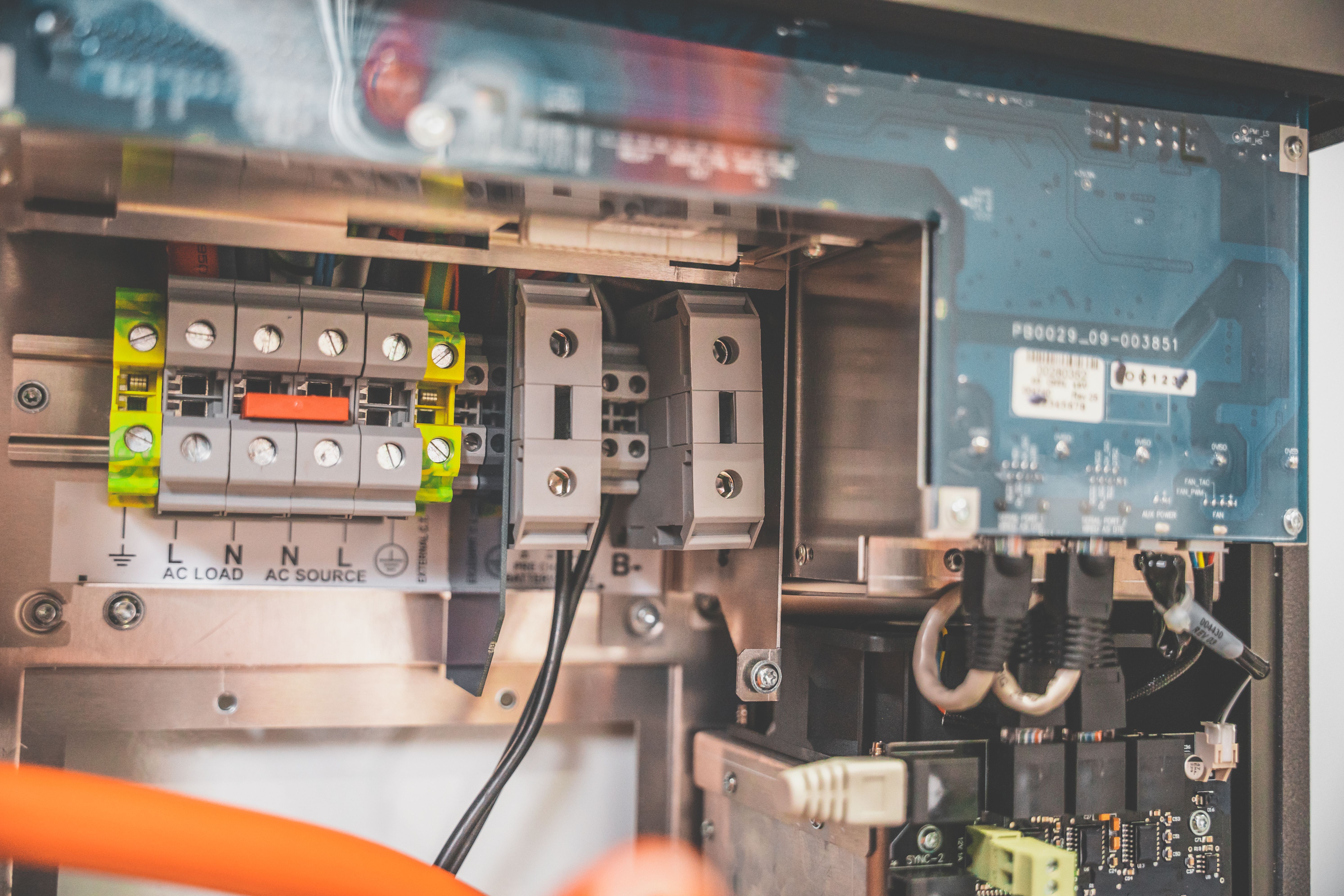
Anyone who has opened an industrial control panel knows the difference between a professionally built cabinet and one that has been modified over the years.
Good organization improves:
- Troubleshooting speed
- Maintenance efficiency
- Safety
- Future modifications
- Installation quality
Best practices include:
- Clearly labeled conductors
- Logical wire routing
- Separate power and signal wiring
- Accessible terminal blocks
- Adequate spacing around components
- Well-documented electrical drawings
Many OEMs and panel builders use software such as SolidWorks Electrical to design cabinet layouts before production begins, helping optimize component placement, cable routing, and documentation.
Reliability Is Designed In
Industrial automation equipment often operates 24 hours a day in environments that would quickly damage consumer electronics.
Unlike office equipment, PLC systems are designed to withstand:
- Electrical noise
- Voltage transients
- Dust and airborne contaminants
- Washdown environments
- High humidity
- UV exposure
- Mechanical vibration
- Wide operating temperature ranges
The enclosure plays a significant role in protecting the electronics from these environmental challenges.
Choosing the appropriate enclosure material, ingress protection rating, and mounting accessories helps ensure years of reliable operation.
Choosing the Right Enclosure Material
While painted steel has traditionally been the standard for PLC cabinets, many OEMs are moving toward non-metallic enclosures for demanding applications.
Polycarbonate Enclosures
High-performance polycarbonate enclosures offer several advantages:
- Corrosion resistant
- Lightweight
- High impact resistance
- Electrically non-conductive
- RF transparent for wireless communications
- UV resistant for outdoor applications
- No paint to chip or rust
These benefits make polycarbonate especially attractive for outdoor control systems, water and wastewater facilities, food processing, renewable energy installations, and corrosive industrial environments.
Designing for Serviceability
The best control panel isn't just easy to build—it's easy to maintain.
Maintenance technicians appreciate cabinets that provide:
- Clear wire identification
- Logical component placement
- Easy access to terminal blocks
- Adequate room for testing equipment
- Space for future expansion
When downtime is measured in thousands of dollars per hour, reducing troubleshooting time becomes just as important as protecting the electronics.
Planning for Future Expansion
Automation systems rarely stay the same.
Machines evolve.
Sensors are added.
Networks expand.
Control strategies become more sophisticated.
A well-designed PLC cabinet should leave room for:
- Additional I/O modules
- Network hardware
- Power distribution
- Larger power supplies
- Future communication equipment
Selecting an enclosure with sufficient mounting space today can prevent expensive redesigns tomorrow.
Why the Enclosure Matters
A PLC cabinet is far more than a container for electrical components.
It provides the physical protection, organization, and accessibility that help industrial automation systems operate safely and reliably for years.
Whether you're designing OEM equipment, building UL 508A control panels, or specifying industrial automation systems, choosing the right enclosure helps protect your investment while simplifying installation and maintenance.
Fibox Solutions for PLC Cabinets
Fibox offers a wide range of polycarbonate enclosures designed for industrial automation and control applications.
Our enclosure solutions provide:
- UL and cUL Listed options
- NEMA 4X and NEMA 6P protection on many models
- High-impact, corrosion-resistant polycarbonate construction
- Mounting panels and DIN rail options
- Transparent cover options for viewing indicators without opening the enclosure
- Factory machining, printing, and assembly services
- ARCA-JIC and Select ARCA-IEC enclosures proudly manufactured in the USA
From compact machine controls to large industrial automation systems, Fibox enclosures help protect the electronics that keep modern industry moving. Explore the complete Fibox enclosure portfolio or contact our enclosure specialists for assistance selecting the best solution for your application. Our team can also provide factory machining, printing, and assembly services to help reduce installation time and simplify your next project.