Explore practical articles covering electrical enclosure selection, environmental protection, industry standards, material comparisons, thermal management, installation best practices, and application-specific design considerations. Whether you're designing a new control system or specifying enclosures for demanding environments, these guides provide the technical knowledge to help you make informed decisions.
Is Polycarbonate a Metal? Understanding This Engineering Plastic
Quick answer
No. Polycarbonate is a thermoplastic polymer, not a metal. It is used for electrical enclosures because it combines high impact toughness, low weight, electrical insulation and corrosion resistance. Depending on the application, those properties can make it a practical alternative to steel, stainless steel, aluminum or fiberglass.
What is polycarbonate?
Polycarbonate is an engineered plastic whose molecular structure includes carbonate groups. It can be molded into complex, repeatable shapes and produced in opaque or transparent grades. Manufacturers can tailor formulations for ultraviolet exposure, flame performance, color, impact behavior and other requirements.
Why does it sometimes feel like a metal replacement?
A molded polycarbonate enclosure can perform many of the same protective functions as a fabricated metal box: it houses electrical and electronic components, limits access to hazardous parts and protects equipment from environmental exposure. It is therefore often compared with metal, even though its physical and electrical properties are very different.
Polycarbonate does not rust
Because polycarbonate contains no iron, it cannot rust. It can still be affected by incompatible chemicals, ultraviolet exposure if the wrong grade is used, excessive heat or poor mechanical design. “Corrosion resistant” should therefore be understood in relation to the specified environment, not as a promise that every plastic tolerates every chemical.
Polycarbonate is electrically insulating
Unlike steel or aluminum, polycarbonate does not conduct electricity under normal enclosure-use conditions. This can reduce certain grounding and bonding concerns associated with a conductive housing, although the finished electrical system must still comply with all applicable wiring, grounding and safety requirements.
Is it as rigid as metal?
No. Polycarbonate has lower stiffness and tensile strength than steel. It will flex more under load. In many enclosure applications, that controlled flexibility is useful because it can absorb impact and recover instead of denting or cracking. In applications dominated by structural loads or extreme rigidity, metal may be the better choice.
Polycarbonate versus fiberglass
Both are nonmetallic and corrosion resistant, but they behave differently. Polycarbonate is a thermoplastic; typical fiberglass enclosures use a thermoset resin reinforced with glass fibers. Polycarbonate can provide a smoother surface, cleaner machining and strong impact performance. Fiberglass can offer stiffness and chemical resistance in certain environments, but machining may expose fibers and damaged areas can crack rather than flex.
Where polycarbonate enclosures are used
Common applications include industrial automation, water and wastewater controls, renewable-energy equipment, telecommunications, monitoring systems, machine controls, building systems and outdoor junction boxes. UV-stabilized grades and suitable NEMA or IP ratings are important when the enclosure will face sun, rain, washdown, dust or temporary submersion.
No—polycarbonate is not stronger than steel in absolute tensile strength or stiffness. Steel carries higher structural loads and resists deformation better. But an enclosure does not succeed on tensile strength alone. Polycarbonate can be the more durable choice where impact recovery, corrosion resistance, electrical insulation, low weight and easy modification matter.
Why “stronger” is misleading
Material strength can refer to tensile strength, stiffness, impact resistance, puncture resistance, fatigue, environmental durability or the performance of a finished part. A steel coupon will generally outperform a polycarbonate coupon in tensile strength and elastic modulus. That does not automatically predict which finished enclosure will last longer in a corrosive wastewater plant, a solar field or a coastal installation.
Polycarbonate bends before it breaks
High-quality polycarbonate is tough and ductile. Under an impact or installation load, it can flex, spread the force and recover. That behavior can look less rigid than metal, but flexibility is not the same as weakness. It may prevent cracking or permanent denting when cables, tools or moving equipment apply a sudden load.
Where steel wins
Steel is the appropriate choice when very high stiffness, structural load capacity, shielding, fire-performance requirements dominate the specification. It can also provide a familiar platform for very large freestanding cabinets. The correct grade, thickness, coating and bonding method must be selected for the environment.
At-a-glance comparison
Property
Polycarbonate
Steel
Tensile strength and stiffness
Lower
Higher
Impact behavior
Tough; can flex and recover
Strong but may dent or permanently deform
Corrosion
Does not rust
Requires material or coating selection
Electrical conductivity
Insulating
Conductive
Weight
Light
Heavier
Field modification
Easy with standard tools
May require heavier tooling and edge treatment
Where polycarbonate can outperform
Polycarbonate does not rust, needs no paint layer to provide basic corrosion resistance and is electrically insulating. It is much lighter than steel, which can reduce lifting effort and support requirements. It is also easier to machine without exposing bare metal that then needs edge protection. These advantages can reduce installation time and maintenance in wet, salty or chemically aggressive locations.
Impact resistance is a system property
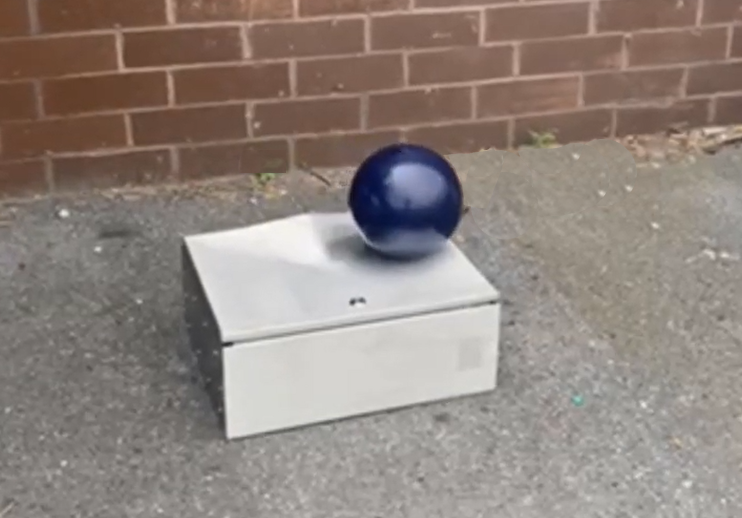
Wall thickness, ribs, corners, cover geometry, mounting method, temperature and the location of cutouts all affect impact performance. A large hole positioned too close to an edge can weaken any enclosure. Compare complete products using certified ratings and relevant test data rather than comparing generic material claims alone. Watch the video to see how well metal holds up.
What about outdoor exposure?
Outdoor polycarbonate should be formulated and certified for ultraviolet exposure. UV-resistant grades help preserve mechanical properties and appearance. Steel also needs the correct coating or alloy for outdoor service; scratches, cut edges and chemical exposure can initiate corrosion. Neither material should be specified without considering the actual environment.
How to choose
Choose steel when maximum rigidity or structural capacity is the controlling requirement. Choose a UV-stabilized polycarbonate enclosure when impact toughness, corrosion resistance, electrical insulation, lower weight and installation efficiency offer greater lifecycle value. If the application combines unusual loads and chemicals, request application-specific test data and validate the completed assembly.
Fibox perspective
Fibox polycarbonate enclosures are designed as engineered housings, not simply plastic substitutes for metal boxes. Features such as reinforced walls, molded bosses, durable gaskets and NEMA Type certifications allow the finished enclosure to use polycarbonate’s flexibility and corrosion resistance as practical strengths.
What to Look For in a NEMA 4 Enclosure (And Why It Doesn't Have to Be Metal)
The Metal Alternative: Why Polycarbonate is the New Standard for NEMA 4
When engineering a standard control panel, defaulting to a painted carbon steel box is a habit. But choosing metal means you are choosing permanent dents, heavy lifting, and eventual rust.
Fibox engineered high-grade polycarbonate enclosures to beat carbon steel at its own game—delivering heavy-duty NEMA 4 protection without the heavy-metal drawbacks.
Polycarbonate vs. Fiberglass Enclosures: Which Is the Better Fit?
When selecting a non-metallic electrical enclosure, polycarbonate and fiberglass-reinforced polyester are two of the most common choices. Both can protect electrical and electronic equipment from moisture, dust, corrosion, and demanding outdoor conditions—but they do not perform identically.
The better material depends on the installation environment, required certifications, enclosure size, modification needs, and expected maintenance over the life of the equipment. Here is what engineers, panel builders, and system integrators should consider.
Why Choose a Polycarbonate Enclosure?
Polycarbonate combines high impact resistance with low weight and excellent design flexibility. It does not rust, is electrically insulating, and is generally easier to drill, machine, and install than heavier enclosure materials.
Key Benefits of Polycarbonate
Excellent impact resistance: Polycarbonate withstands bumps and impacts without the cracking, splintering, or permanent denting associated with some other materials.
Lightweight construction: Lower weight makes enclosures easier to transport, handle, and mount—especially in wall-, pole-, and equipment-mounted applications.
Corrosion resistance: Polycarbonate will not rust and performs well in wet, humid, and many corrosive environments.
Easy modification: Openings for cable glands, pushbuttons, displays, connectors, and ventilation equipment can be machined cleanly and efficiently.
Transparent-cover options: Clear or smoked transparent covers allow operators to inspect indicators, meters, and controls without opening the enclosure and exposing internal equipment.
Electrical insulation: As a non-conductive material, polycarbonate does not require grounding in the same way as a metal enclosure.
Consistent appearance: The molded surface does not need painting and will not expose fibers during normal handling or machining.
Common Polycarbonate Enclosure Applications
Industrial automation and control systems
Water and wastewater equipment
Solar and renewable-energy installations
Building automation, HVAC, fire, and security systems
Telecommunications and wireless infrastructure
Marine and coastal equipment
Transportation and infrastructure
Outdoor monitoring, metering, and SCADA systems
For outdoor service, the specific material formulation and enclosure certification matter. Fibox polycarbonate enclosures use materials selected for demanding industrial environments, with product-specific NEMA, UL, cUL, IP, impact, and UV-performance ratings.
When Is Fiberglass Considered?
Fiberglass-reinforced polyester has a long history in electrical enclosure applications. It is rigid, non-conductive, and available in formulations intended for chemical and outdoor environments. It may be considered for certain high-temperature or chemical-exposure applications where a specific fiberglass formulation has documented compatibility with the operating conditions.
Fiberglass also comes with practical tradeoffs. It is typically heavier than polycarbonate, and machining can create abrasive dust and exposed glass fibers that require appropriate protective equipment and cleanup. Fiberglass may also be more susceptible to surface weathering, fiber bloom, cracking, or damage from impact, depending on its formulation and service conditions.
Chemical resistance should never be decided by material category alone. The exact chemical, concentration, exposure time, temperature, and enclosure formulation must all be evaluated.
Polycarbonate vs. Fiberglass at a Glance
Consideration
Polycarbonate
Fiberglass-Reinforced Polyester
Weight
Lightweight
Generally heavier
Impact resistance
Excellent
Good, but may crack or chip under severe impact
Corrosion resistance
Excellent; will not rust
Excellent; will not rust
Machining and modification
Clean and relatively easy to machine
Can produce abrasive dust and exposed fibers
Transparent-cover options
Widely available
Typically opaque
Surface finish
Smooth molded finish
Textured molded finish; may weather over time
Chemical resistance
Strong across many common substances; verify compatibility
Strong across many common substances; verify compatibility
Electrical conductivity
Non-conductive
Non-conductive
Outdoor performance
Excellent with the correct UV-stabilized formulation
Depends on resin formulation and exposure conditions
Installation labor
Easier handling and modification can reduce labor
Added weight and machining precautions may increase labor
NEMA, UL, cUL, and IP ratings apply to a tested enclosure design—not automatically to every enclosure made from a particular material. Always verify the ratings and certifications of the exact product being specified.
Fibox Polycarbonate Enclosure Options
Fibox offers a broad range of polycarbonate enclosures for industrial and outdoor applications:
ARCA–JIC: Made in the USA and designed for demanding North American applications, with configurations offering NEMA 4X and NEMA 6P protection.
ARCA–IEC: Large-format polycarbonate cabinets combining installation flexibility, corrosion resistance, and lightweight construction. Selected sizes are available with smoked transparent covers.
Customized enclosures: Fibox can provide CNC machining, printing, engraving, and assembly services to help reduce secondary operations and simplify installation.
Product ratings vary by series and configuration. Review the individual product specifications to confirm dimensions, materials, environmental ratings, approvals, and accessory compatibility.
Which Enclosure Material Is Right for Your Application?
Choose polycarbonate when your priorities include high impact resistance, low weight, corrosion resistance, clean modification, transparent-cover availability, and installation efficiency. Consider fiberglass when a documented requirement favors a particular fiberglass formulation for the application.
In either case, begin with the operating environment rather than the material name. Evaluate water and dust exposure, UV radiation, chemicals, temperature, impact risk, mounting method, required certifications, and future access to the equipment.
For many industrial, infrastructure, water, energy, and automation applications, a properly rated Fibox polycarbonate enclosure provides an effective balance of protection, durability, and ease of installation.
Understanding Impact Resistance, Tensile Strength and Real-World Enclosure Performance
Is IK10 enough for an electrical enclosure? For many industrial and outdoor applications, it represents an excellent level of impact resistance—but IK10 alone does not prove that an enclosure is right for every installation. It measures performance against a standardized 20-joule mechanical impact. It does not measure tensile strength or establish protection against water, dust, corrosion, ultraviolet exposure, chemicals, temperature extremes or impacts beyond the test level.
Selecting an impact-resistant electrical enclosure therefore requires more than finding the highest number on the IK scale. Engineers should consider how the complete enclosure will behave at the actual installation—including the material, mounting, openings, hardware and environmental ratings.
What Does an IK10 Rating Mean?
The IK code is defined by IEC 62262, the international standard that classifies the protection an electrical enclosure provides against external mechanical impacts.
An IK10 rating represents 20 joules of impact energy. A commonly used illustration is the energy produced by a 5 kg (11 lb) mass striking after a 400 mm (15.75 in) drop.
IK rating
Impact energy
General context
IK08
5 joules
Moderate impact exposure in outdoor or public locations
IK09
10 joules
Higher-risk industrial locations
IK10
20 joules
Highest classification on the standard IK scale
This comparison describes standardized impact-energy levels. It does not predict every collision, blow or act of vandalism an installed enclosure might experience.
IK10 is often considered for:
Industrial and manufacturing facilities
Water and wastewater treatment plants
Transportation and public infrastructure
Outdoor utility and communications installations
Locations exposed to tools, equipment or falling objects
Areas where accidental or deliberate impact is a concern
IK10 Does Not Mean Indestructible
IK10 is the highest classification on the standard IK scale, but it is not a promise that an enclosure cannot crack, deform, open or otherwise become damaged.
The better question is not simply, “Is it IK10?” It is:
Will the complete enclosure continue protecting the installed equipment under the conditions expected at this location?
If the anticipated impact can exceed the standardized test level—or if failure would create a serious safety or operational risk—the design may also require guards, bollards, recessed mounting, relocation or another physical barrier.
Tensile Strength and Impact Resistance Are Not the Same
This distinction matters because the two properties are often confused in enclosure comparisons.
Tensile strength measures the stress a material withstands while being pulled apart. It is normally reported in pounds per square inch (psi) or megapascals (MPa).
Impact resistance measures how a material or finished enclosure responds to a sudden blow. Depending on the test, it may be reported in joules, inch-pounds, foot-pounds per inch or another impact-related unit.
Therefore, a statement such as “900 in-lb tensile strength” mixes two different concepts. Inch-pounds express energy; they are not a tensile-strength unit. Likewise, a tensile-strength value cannot be converted into an IK rating.
Is Fiberglass Stronger Than Polycarbonate?
The answer depends on what “stronger” means.
Fiberglass-reinforced polyester can have higher tensile and flexural strength than unreinforced polycarbonate. Polycarbonate, however, is considerably more ductile: it can deform and absorb energy instead of fracturing as readily under a sudden impact.
A published electrical-enclosure material comparison illustrates the difference:
Typical material property
Compression-molded fiberglass (SMC)
Polycarbonate
What it indicates
Tensile strength
14,000 psi
9,000 psi
Fiberglass is stronger in this tensile test
Elongation
2.05%
7.0%
Polycarbonate stretches further before breaking
Falling-dart impact
300 lb-in
600 lb-in
Polycarbonate absorbs more energy in this impact test
The same source reports higher tensile values for other fiberglass construction methods, demonstrating why broad claims should be avoided. Resin formulation, glass content, molding process, wall thickness, geometry and test method can all affect the result.
The practical takeaway is simple:
Fiberglass may be stiffer and stronger in tension, while polycarbonate may provide greater ductility and resistance to sudden impact.
For an enclosure exposed to drops, tools, flying debris, shipping damage or vandalism, the tested impact performance of the completed enclosure—including its IK rating—is more relevant than tensile strength alone.
Why Polycarbonate Performs Well Under Impact
Polycarbonate combines useful strength with the ability to flex under load. That ductility helps the material absorb and distribute impact energy rather than immediately forming a crack.
This can provide practical advantages during:
Shipping and material handling
Installation and field service
Exposure to vibration or accidental tool strikes
Outdoor use around vehicles or equipment
Machining and the installation of controls or cable entries
Polycarbonate is also lighter than many fiberglass enclosures and does not produce glass fibers when machined. Properly selected polycarbonate enclosures can provide electrical insulation, resistance to rust and strong outdoor performance.
None of this means every polycarbonate enclosure performs identically. The finished design, material formulation, wall geometry, cover, hardware and testing all matter. The rating of the exact enclosure is more useful than a generic material claim.
IK10 and NEMA 4X Measure Different Hazards
An IK rating addresses external mechanical impact. It does not establish protection against dust, rain, hose-directed water, corrosion or submersion. An IK10 electrical enclosure is therefore not automatically waterproof or corrosion-resistant.
Those hazards are addressed by other classifications, including IP ratings and, in North America, NEMA enclosure Types.
IK10 and NEMA 4X are not competing grades:
IK10 addresses resistance to a standardized 20-joule external impact.
NEMA 4X addresses environmental conditions including windblown dust, rain, splashing water, hose-directed water and an additional level of corrosion protection.
A demanding industrial or outdoor installation may require both, along with appropriate UV, temperature, flammability and electrical-safety ratings.
The Exact Enclosure Configuration Matters
Published ratings apply to a tested enclosure design and configuration. The performance of the installed enclosure can also depend on:
Cover or door material
Latch and locking arrangement
Gasket condition
Wall, machine or pole-mounting method
Cable glands, vents and other accessories
Holes, cutouts and machining
Weight and placement of internal components
A poorly positioned opening or incorrectly installed cable entry can create a vulnerable point even when the original enclosure has strong impact and ingress ratings. Transparent and opaque covers, alternative locks and different enclosure sizes may also carry different published ratings.
Always verify the technical data for the specific part number and completed configuration rather than assuming that one rating applies to an entire product family.
Fibox provides enclosure customization, including machining, printing, engraving and assembly, to reduce field modification and improve consistency. The required performance of the finished installation should still be confirmed for the specific design.
Five Questions to Ask Beyond IK10
Before specifying an enclosure, ask:
What is likely to strike it? Consider the object’s mass, shape, speed and frequency.
What must happen after an impact? Determine whether the enclosure must remain sealed, electrically safe and fully operational.
What other environmental hazards are present? Evaluate water, dust, UV, chemicals, corrosion and temperature.
How will the enclosure be mounted and modified? Include cable entries, ventilation, windows, controls and internal component loads.
Has the exact configuration been rated? Confirm the part-specific technical data and applicable certifications.
So, Is IK10 Enough?
For many industrial and outdoor applications, IK10 provides an excellent level of standardized impact resistance. But it should be evaluated as one part of a complete enclosure specification.
Tensile strength can help describe a material, but it does not tell you how a finished enclosure will react to a sudden blow. Nor does IK10 establish protection against water, dust, corrosion or long-term environmental exposure.
The right enclosure brings together:
Verified impact resistance
Appropriate ingress and NEMA ratings
Material performance suited to the environment
UV, temperature and chemical compatibility
Secure mounting and correctly installed accessories
Certifications required for the application
Selected Fibox ARCA polycarbonate enclosures provide IK10 impact resistance together with environmental and material-performance ratings for demanding installations. For example, published data for the Fibox ARCA 507030S lists polycarbonate construction, IK10 impact resistance, IP65 ingress protection, UL 746C UV resistance and a continuous operating-temperature range of −40 to 80°C (−40 to 175°F).
Ratings vary by product and configuration. Explore Fibox enclosures or contact Fibox to discuss the impact, ingress and environmental requirements of your application.
Frequently Asked Questions
What does IK10 mean on an electrical enclosure?
IK10 means the enclosure has been classified for resistance to 20 joules of external mechanical impact under the applicable standardized test conditions. It is the highest classification on the standard IK scale.
Does higher tensile strength mean better impact resistance?
No. Tensile strength measures resistance to being pulled apart, while impact resistance measures the response to a sudden blow. A material can have high tensile strength but relatively low ductility, making it more likely to crack under certain impacts.
Is polycarbonate stronger than fiberglass?
Each material excels in different measurements. Fiberglass can provide greater tensile and flexural strength. Polycarbonate can provide greater elongation, ductility and impact absorption. The better material depends on the hazards and performance requirements of the application.
Is an IK10 enclosure vandal-proof?
IK10 indicates a high level of standardized impact resistance, but it does not make an enclosure impossible to damage. More severe impacts, repeated blows, sharp tools or attacks on hardware can exceed what the rating establishes.
Is IK10 better than NEMA 4X?
Neither rating is better because they measure different hazards. IK10 addresses external mechanical impact. NEMA 4X addresses environmental protection including dust, rain, splashing and hose-directed water, plus an additional level of corrosion protection. An installation may require both.
Can machining affect an enclosure’s protection?
Yes. Cutouts and installed components change the finished assembly. Their location, rating and installation method can affect impact and ingress performance. Evaluate the completed enclosure rather than relying only on the rating of the unmodified product.
Electrical enclosures have traditionally been manufactured from painted steel, stainless steel, or fiberglass. However, advances in engineered polymers have made non-metallic electrical enclosures a preferred solution for many industrial and outdoor applications.
Today's polycarbonate enclosures offer exceptional durability while eliminating many of the challenges associated with traditional metal enclosures.