
Is Polycarbonate Stronger Than Steel?
Is Polycarbonate Stronger Than Steel?
The Better Question Is: Stronger Against What?
No—polycarbonate is not stronger than steel in absolute tensile strength or stiffness. Steel carries higher structural loads and resists deformation better. But an enclosure does not succeed on tensile strength alone. Polycarbonate can be the more durable choice where impact recovery, corrosion resistance, electrical insulation, low weight and easy modification matter.
Why “stronger” is misleading
Material strength can refer to tensile strength, stiffness, impact resistance, puncture resistance, fatigue, environmental durability or the performance of a finished part. A steel coupon will generally outperform a polycarbonate coupon in tensile strength and elastic modulus. That does not automatically predict which finished enclosure will last longer in a corrosive wastewater plant, a solar field or a coastal installation.
Polycarbonate bends before it breaks
High-quality polycarbonate is tough and ductile. Under an impact or installation load, it can flex, spread the force and recover. That behavior can look less rigid than metal, but flexibility is not the same as weakness. It may prevent cracking or permanent denting when cables, tools or moving equipment apply a sudden load.
Where steel wins
Steel is the appropriate choice when very high stiffness, structural load capacity, shielding, fire-performance requirements dominate the specification. It can also provide a familiar platform for very large freestanding cabinets. The correct grade, thickness, coating and bonding method must be selected for the environment.
At-a-glance comparison
|
Property |
Polycarbonate |
Steel |
|
Tensile strength and stiffness |
Lower |
Higher |
|
Impact behavior |
Tough; can flex and recover |
Strong but may dent or permanently deform |
|
Corrosion |
Does not rust |
Requires material or coating selection |
|
Electrical conductivity |
Insulating |
Conductive |
|
Weight |
Light |
Heavier |
|
Field modification |
Easy with standard tools |
May require heavier tooling and edge treatment |
Where polycarbonate can outperform
Polycarbonate does not rust, needs no paint layer to provide basic corrosion resistance and is electrically insulating. It is much lighter than steel, which can reduce lifting effort and support requirements. It is also easier to machine without exposing bare metal that then needs edge protection. These advantages can reduce installation time and maintenance in wet, salty or chemically aggressive locations.
Impact resistance is a system property
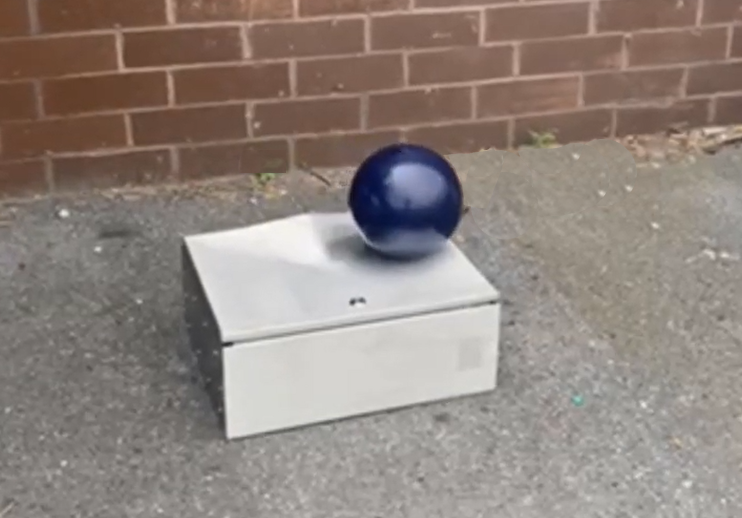
Wall thickness, ribs, corners, cover geometry, mounting method, temperature and the location of cutouts all affect impact performance. A large hole positioned too close to an edge can weaken any enclosure. Compare complete products using certified ratings and relevant test data rather than comparing generic material claims alone. Watch the video to see how well metal holds up.
What about outdoor exposure?
Outdoor polycarbonate should be formulated and certified for ultraviolet exposure. UV-resistant grades help preserve mechanical properties and appearance. Steel also needs the correct coating or alloy for outdoor service; scratches, cut edges and chemical exposure can initiate corrosion. Neither material should be specified without considering the actual environment.
How to choose
Choose steel when maximum rigidity or structural capacity is the controlling requirement. Choose a UV-stabilized polycarbonate enclosure when impact toughness, corrosion resistance, electrical insulation, lower weight and installation efficiency offer greater lifecycle value. If the application combines unusual loads and chemicals, request application-specific test data and validate the completed assembly.
Fibox perspective
Fibox polycarbonate enclosures are designed as engineered housings, not simply plastic substitutes for metal boxes. Features such as reinforced walls, molded bosses, durable gaskets and NEMA Type certifications allow the finished enclosure to use polycarbonate’s flexibility and corrosion resistance as practical strengths.
Contact Fibox by email, phone, or fax If you have questions.
Sources for technical review
POLYVANTIS LEXAN Polycarbonate Datasheet